
What We Teach vs What We Reinforce
This week, I'm exploring one of the greatest paradoxes in professional development. Organizations invest in training to influence behavior, yet people often return to environments that reinforce the very behaviors they're trying to change. Why? Because we don't simply apply new skills. We interpret them through the perspectives we've developed over a lifetime. Perspective shapes how we show up. How we show up shapes what others experience. What people consistently experience becomes culture.
7/22/20264 min read

Organizations invest millions of dollars each year developing their people. Leadership programs. Professional development. Communication workshops. Coaching. Assessments. Books. Podcasts. And an endless library of online learning and resources.
If there were an Olympic event for creating learning opportunities, most organizations would at least make the semifinals.
And to be clear – I don't think that's a bad thing. Organizations provide training programs because they're trying to solve real problems. They invest in their people to strengthen the skills to communicate more effectively, collaborate and contribute more intentionally, lead with confidence and compassion, take ownership with pride, navigate change with curiosity, and ultimately build a unified culture.
In other words... They're not investing in learning because they love training. They're investing because they hope to influence the individual’s behavior and impact the collective.
That seems logical. Until you consider one uncomfortable question.
If learning alone changed behavior, wouldn't every organization with a great leadership program also have a great culture?
Most of us know that's not how it works. So... What's missing?
The Human Part
Here's where we get wonderfully, frustratingly human. We tend to believe people will do what we teach.
In reality... People are far more likely to do what they consistently experience.
Think about it. A team attends a workshop on psychological safety Monday morning. By Tuesday afternoon, someone shares an idea in a meeting and gets shut down with, "We've already tried that." Guess which lesson is going to be remembered. Not the workshop. The interaction. Because every interaction teaches. Every conversation reinforces something. Every response communicates, "This is how we do things here." Whether we realize it or intended it to.
The Paradox
Organizations respond to behavioral challenges with skill development. And they should. Skills matter.
But here's where being human complicates things. Most of us don't struggle because we don't know what to do. We struggle because what we've learned over a lifetime quietly competes with what we're trying to learn today.
A communication workshop can't erase twenty years of believing conflict should be avoided. A leadership program doesn't automatically change the belief that asking for help makes us look weak. A feedback model can't overcome the perspective that disagreement is disrespect.
We don't leave training and become different people. We leave training and interpret new skills through the perspectives we’ve developed over time. Those perspectives quietly shape what we come to believe – and ultimately how we behave.
The interesting part is that most of those perspectives aren't conscious. Very few professionals walk into work thinking, "I avoid conflict because I learned long ago that disagreement damages relationships." We don't narrate our perspectives – we simply live from them. Over time, experience reinforces perspective until it begins to feel less like a perspective...and more like reality.
That's what makes lasting change so challenging. We can’t change what we have yet to recognize.
Imagine someone receives the same feedback three years in a row. "Needs to communicate more directly." The organization sees a communication gap. So, they send the employee to another communication workshop. The employee learns a new framework. Practices a few new techniques. Returns to work. Nothing changes.
Why?
Because communication wasn't the real challenge. The employee still views direct communication through a perspective shaped by past experiences – one that has led them to believe conflict is something to avoid. Until that perspective changes, every new communication skill gets filtered through the same old belief.
The skill wasn't wrong. The diagnosis was incomplete.
Someone can learn how to give feedback while still viewing conflict as something to avoid. Someone can attend a leadership program while still seeing vulnerability as weakness. Someone can practice active listening while still believing their role is to have all the answers.
The skill changed. The perspective didn't. And perspective has a funny way of winning. Not because people are resistant to learning. Because our behaviors naturally follow what we believe to be true.
Why Culture Feels So Difficult to Change
Culture often feels like this invisible force floating around the office. It isn't.
Culture is surprisingly ordinary. It's built one interaction at a time and becomes “how we do things around here.” Long before culture is written into a mission statement, it's experienced in everyday moments.
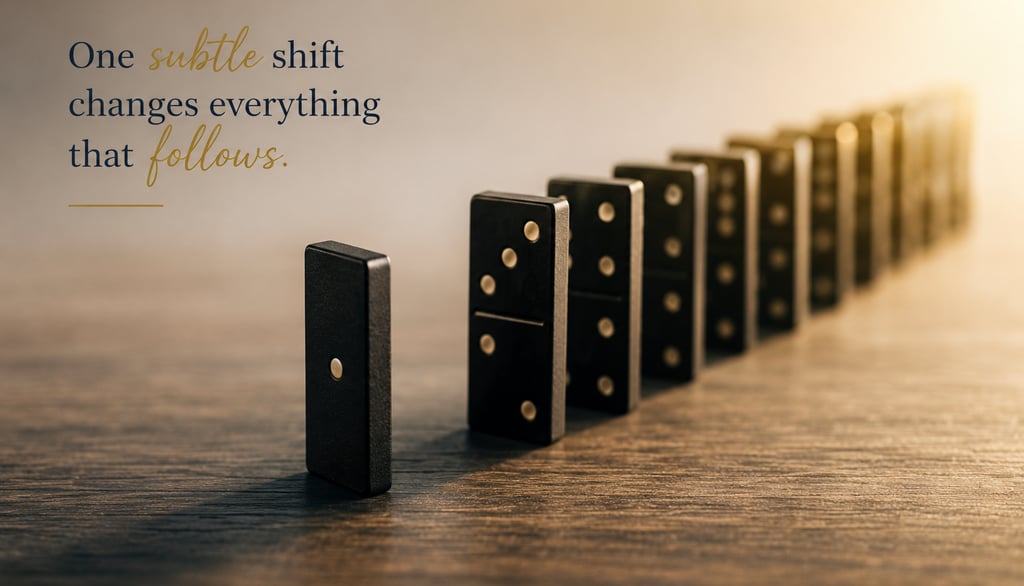
One meeting. One conversation. One decision. One email. One response. One moment when someone chooses whether to speak up or stay quiet.
Culture isn't created by the values or missions written on the wall. It's created by the repeated behaviors people experience every day, not by the skills alone. And those behaviors are shaped by perspective.
How we see ourselves. How we see one another. How we define success. How we respond to mistakes. What we reward. What we tolerate. What we quietly reinforce without ever realizing it because we believe it’s just the right way of being.
A Different Way to Think About Development
Perhaps the goal of professional development isn't simply to help people learn something new. Skills are the lesson. Behavior is the message. Perspective determines whether the lesson ever becomes part of who we are.
Perhaps it's to help them see something they understand differently. Because when perspective shifts... Beliefs begin to shift. When beliefs shift... Behavior begins to shift.
And when enough everyday behaviors begin to shift... Culture follows. Not because someone announced a new initiative. Because people started showing up differently.
One Last Thought
The irony is that an organization rarely struggles because their people don't care.
Most professionals genuinely want to do good work. Most leaders genuinely want to support their teams. Most organizations genuinely want healthy cultures. The challenge isn't usually intention. It's alignment.
When what we teach... Matches what we model... Matches what we reinforce... People don't just learn. They believe. And when our perspective changes, beliefs and behavior simply become who they are.
Perspective in Practice.
Perspective shapes how we show up.
How we show up shapes what others experience.
What people consistently experience becomes culture.
Perspective Prompt
If every interaction teaches people what success and culture looks like in your organization, what lessons are your everyday behaviors actually teaching?